Willow or Hazel for a Small Woven Basket?
Willow or hazel for a small woven basket? Compare the rods you have and choose a suitable weave, shape and finish before you begin your first project.
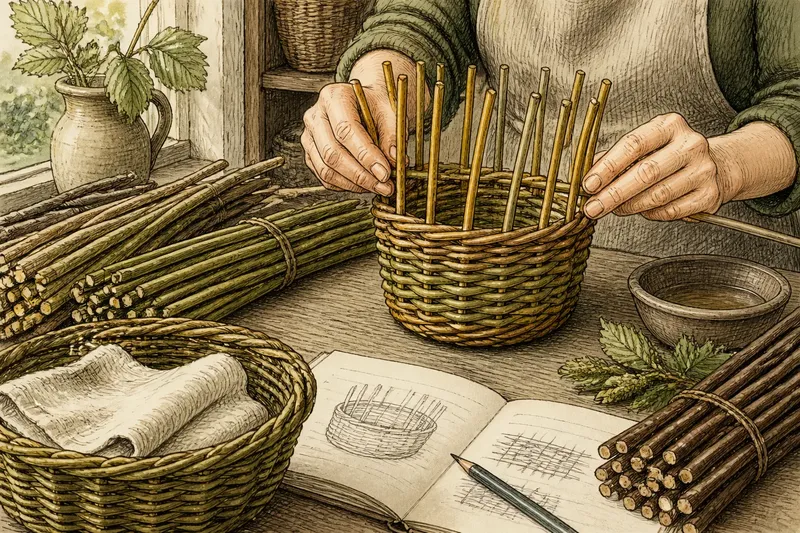
You have a bundle of rods on the bench and a small basket in mind: perhaps a holder for gloves or folded cloths. Willow or hazel for a small woven basket is a choice best made by looking at the actual rods, since flexibility and thickness vary with the plant, the cut and the preparation.
Willow is often used for close weaving, while hazel rods are often firmer, but neither description fits every piece. Check a sample gently, then choose a shape that suits what the material can do. A stiff rod is like a wooden spoon: it can hold a line, but you should not expect it to curl neatly around a tight corner.
What shape and use do you have in mind?
Start with the basket’s job. A close, rounded body suits fine rods that can follow repeated turns. An open basket can accommodate thicker pieces and a less uniform surface. For light household items, either material may work if the base and rim are sound.
Think about the sides as well as the base. A shallow form asks less of the rods than a tall body with tight curves. If you want to carry the basket, the handle, its attachments and the rest of the structure all need to suit that use; choosing a particular wood does not make weak construction dependable.
How do the rods behave in your hands?
Willow rods are often a good match for a close weave, particularly when they are prepared for basketry and bend smoothly around the stakes. Hazel rods are often firmer and may suit a more open design. These are tendencies, not rules: species, growing conditions, the part of the stem selected and preparation can all affect a rod’s flexibility and thickness.
Try a sample from the bundle before planning the weave around it. Bend it gently in the direction your design requires. If it curves smoothly, it may suit that turn; if it creases, cracks or resists, set it aside, prepare it according to the supplier’s directions, or choose a gentler curve. Do not force a rod that is resisting.
Dryness and preparation matter. A dry rod may resist bending, while a very damp one may feel difficult to control. Follow the supplier’s instructions for the particular material, and check a sample again before weaving. A bundle can contain rods with noticeably different qualities, so sort them rather than assuming they will all behave alike.
How should you compare the rods before starting?
- Flexibility: Gently curve a sample towards the tightest turn in your design. If it bends without a sharp crease, keep it for that role; if it cracks or resists, choose a gentler curve or another rod.
- Thickness: Compare several rods against the spaces in your planned weave. If they fit without crowding, use them for the body; if they are too thick, reserve them for a suitable structural role or select finer rods.
- Consistency: Lay a handful side by side. If their thicknesses are broadly alike, group them for even rows; if they vary, sort them by size and assign each group a different role.
- Surface condition: Look for splits, crushed areas or decay. If a rod is sound, keep it in the bundle; if it is damaged, discard it from the working selection and use a sound piece instead.
- Length: Hold a rod against the section it must weave. If it reaches with room for the intended finish, keep it for that section; if it falls short, use it for a smaller part or choose a longer rod to avoid an awkward join.
- Preparation: Check the label or ask the supplier whether the rods are ready to weave. If instructions are available, follow them and test a sample; if their condition is unclear, seek guidance before soaking or bending the whole bundle.
If gathering your own rods, identify the plant confidently and get permission to cut. Use clean tools and avoid taking material where cutting could harm a valued plant or habitat. If permission or local rules are unclear, ask the landholder or relevant local authority before gathering.
How can the weave suit each material?
For willow, consider a close, repeated weave if the rods you have bend comfortably around the stakes. Sort them by thickness, keep the rows steady and ease off if the stakes begin to distort. A rounded body can work well when the rods follow its curve without being forced.
For hazel, consider a more open pattern and gradual sides if your samples feel firm. Slimmer pieces may be easier to weave than thicker ones, but check each rod rather than relying on its name. A broad, shallow shape can avoid tight turns and let visible variation remain part of the finish.
Before starting, set aside the longest straight rods for parts that need continuity, and group the finer pieces for the body. Keep a few suitable spares nearby. For a first basket, use a simple base, upright stakes, a repeating body weave and a finish that follows a reliable pattern’s instructions. Do not improvise a handle for a basket intended to carry a heavy or awkward load.
How do you decide between willow and hazel?
Say you have a small bundle of rods for a basket holding folded cloths. In this invented situation, you find that the willow samples bend smoothly around a curved guide, while the hazel samples crease at that same turn. You sort the willow by thickness, use the finer rods for a close body weave and set aside the creasing hazel. The result you can expect is a design better matched to the rods you checked; if the intended basket were open and shallow instead, you could test the sound hazel rods against that gentler shape and reconsider.
Choose according to the bundle in front of you, not a broad claim about either plant. If fine rods bend readily and you want a compact, close weave, willow may suit the job. If sound, firm rods fit an open design, hazel may be appropriate. A deliberate combination can work when each material has a clear role, such as a firmer frame and a finer body; one material throughout is usually simpler while learning.
What questions do basket makers ask about these rods?
Is willow easier for a first small basket?
Fine, prepared willow is often convenient for a close, rounded weave, but rods vary and still need checking. Choose a simple shape and sort pieces by thickness before you begin.
Can hazel be used for a small basket?
Yes, if the rods are sound and suit the weave you have planned. Test their flexibility, and consider an open pattern with gradual curves if they feel firm.
Can willow and hazel be woven together?
They can be combined when the design gives each a distinct job. Since their thickness and flexibility may differ, sort them by role and avoid alternating them casually through the same rows.
Which is better for a basket handle?
Neither is automatically better; suitability depends on the handle’s form, attachment, the rods’ condition and the intended load. Follow a pattern designed for the use, and ask an experienced basketmaker for guidance if the handle must carry anything substantial.
What should you check just before weaving?
Place a sample rod beside your sketch and identify the tightest turn. Bend it gently towards that curve, then decide: if it follows the line without damage, keep the shape; if it resists, soften the curve, choose another rod or revise the design. This final check makes the choice between willow or hazel for a small woven basket about your materials and intended use, rather than the label on the bundle.
Keep the rods you reject separate from the working pile, so you do not reach for them halfway through a row. A clear sorting space and a simple design make it easier to respond to the material as you weave.