The Spare-Room-Ready Myth
A guest room need not sit unused between visits. Set up a useful work corner, keep bedding easy to reach and make a clear route back to a welcoming bed.
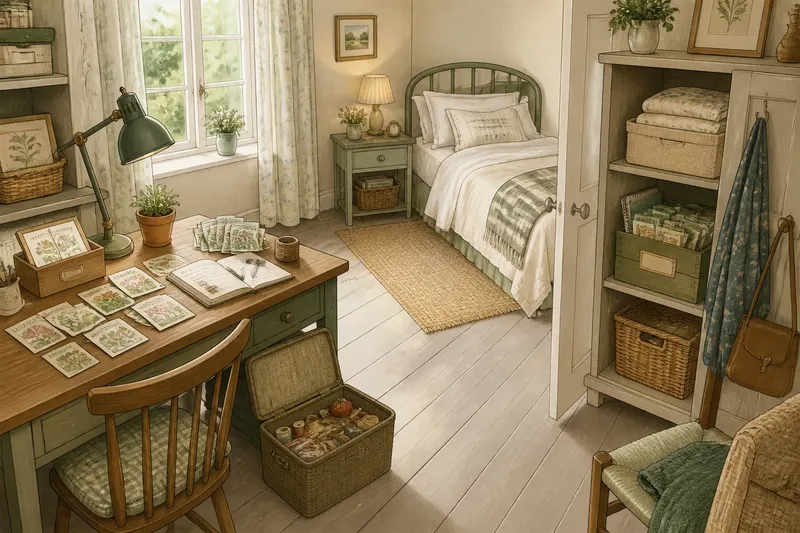
The sewing basket is open on the bed, seed packets cover the desk, and a relative has just asked to stay. A flexible guest room can handle everyday jobs without turning the evening before a visit into a furniture shuffle. The trick is to decide which tasks fit the room and where each one goes when the bed is needed.
How can a spare room earn its keep?
Choose one or two quiet tasks that suit the room’s layout: mending, reading, sorting seed packets or folding laundry. Give each task a defined surface and a clear way to stop. A sewing project might live in a lidded basket under the desk; laundry can be folded on a chair and carried away afterwards.
Keep the bed reachable and leave a route from the door to it. Think of the floor like a path through a field: if boxes creep across it, the room stops working for its main purpose. Avoid activities that need a fixed, bulky set-up unless there is genuinely space for both uses.
Where should everyday supplies go?
Put materials in containers that match their task and destination. A small box can hold thread, scissors and mending; a labelled crate can keep seed packets and a notebook together. Store each container in a cupboard or on a shelf, not on the bed or in the walking route.
Before bringing an item into the room, decide where it will return. If it has no sensible home, use it elsewhere or clear a different item out. This prevents the guest room becoming a general landing place for things that are waiting for a decision.
Say you sort seed packets at the desk and have a small box, a notebook and a clear cupboard shelf. Put the packets and notebook in the box when you finish, then return it to that shelf. The observable result is an empty desk and an unobstructed route, while the seed-sorting job remains easy to resume.
What should be ready for a visitor?
Keep guest supplies together so you can prepare the bed without searching through household cupboards. A clean sheet set and pillowcases can sit in a dry drawer or fabric bag. Store an extra blanket nearby, and leave a chair, hook or shelf free for a visitor’s clothes and bag.
Before someone arrives, check that the bedding is clean and dry, the lamp works, and the route from the door is clear. Air the room if the weather and conditions allow. Ask about practical needs you cannot infer, such as space for a walking aid or a cot, and make another plan if the room cannot accommodate them comfortably.
How do you reset the room for a visit?
- Put task materials into their labelled containers; if they fit, return them to their assigned shelf, and if they do not, remove or reduce the task supplies.
- Clear the bed and the route between the door and bed; if furniture blocks either, move it before making up the bed.
- Make the bed with the clean sheet set; if the linen is damp or musty, wash and dry it before use.
- Check the lamp and place the spare blanket within reach; if the lamp does not work, provide a safe working alternative or arrange another room.
- Leave a chair, hook or shelf free for belongings; if none is available, clear one rather than placing bags on the bed or floor.
After the visit, wash or air the bedding as appropriate, return it to its storage place and put the room back into its ordinary use. A reset works best when it has a clear ending; otherwise, guest supplies can linger on the desk and crowd out the task the room was meant to support.
What if the room cannot serve both purposes?
Look at the furniture that blocks access before buying anything new. A deep desk or overflowing wardrobe may be taking space needed for the bed or a visitor’s belongings. If an item is used rarely, relocate it; if it is essential, consider a smaller desk, a shallow shelf or a daybed that suits the room.
Imagine a room with a sewing desk, a bed and boxes stacked beside the door. The starting point is that the boxes block the route and the sewing basket has nowhere to go. Move the boxes to their proper storage place, put the basket on a shelf, then check whether the bed and walking route are clear; if they are, the room can serve both uses, but if the desk still blocks access, move or replace it before offering the room to a guest. These are invented circumstances, not a report of a real household.
If there is no comfortable arrangement, do not force one. Discuss another sleeping option with the visitor, such as a suitable room elsewhere in the home or nearby. The ordinary work the room supports matters too.
Which guest-room details are easiest to overlook?
Where should spare bedding go?
Keep one clean set together in a dry drawer, cupboard or fabric bag. If it is hard to find, move it to a clearly marked place near the room.
Should the bed stay made?
No; store the linen and make the bed when a visit is planned, or use a washable cover if the room is used regularly. Choose the option that keeps bedding clean without making the room awkward for its everyday job.
What if a visitor gives little notice?
Keep the bed accessible and the guest supplies together so you can make a quick, honest decision. If an unfinished task or unsuitable layout cannot be cleared in time, explain the situation and arrange another sleeping place.
How can the room stay ready without sitting idle?
Use the phrase “easy to reset” as the standard for a guest room, rather than expecting it to look untouched. Keep only tasks with a contained set-up, give their materials a proper home, and protect the bed and route from items that accumulate.
That approach lets a spare room support a quiet household task on an ordinary afternoon and still become a welcoming place to sleep. The useful final check is simple: can you reach the bed, find the clean linen and put away the current task without moving someone else’s belongings? If not, change the task or its storage before the next visit.