A Rainy Afternoon with a Deck of Cards
A rainy afternoon with a deck of cards is easier to enjoy with a game matched to the group, a clear playing space and simple plans for pauses.
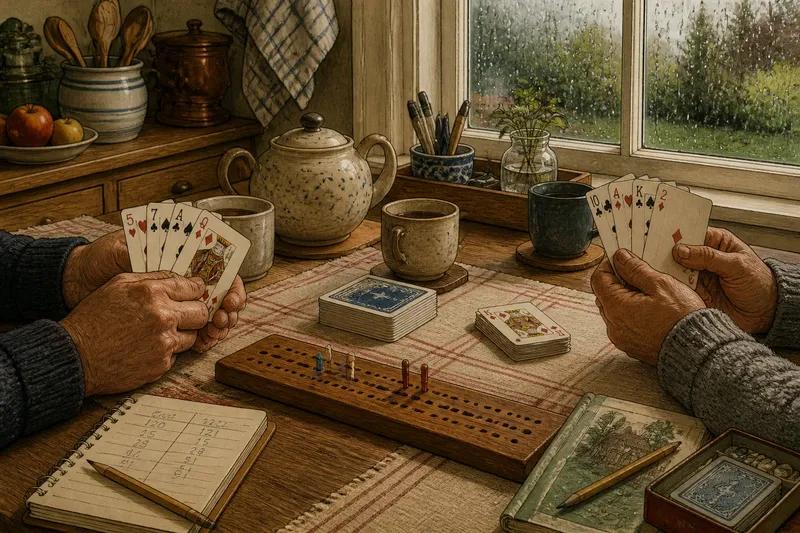
Rain ticks against the kitchen window as you clear a patch of table beside the cooling teapot. A rainy afternoon with a deck of cards needs little more than a sound pack, enough light to read the suits and a game that fits the people who are there.
Which card game fits the group?
For two players, choose a version of gin rummy or cribbage that both people can follow. Gin rummy needs a deck and a way to record scores; cribbage also needs a board or another agreed way to track points. Simple rummy varies by household, so check that the version you choose suits the number of players.
For a larger group, use a game whose rules accommodate everyone present. If no one knows those rules well, choose a familiar alternative rather than trying to teach several people while dealing. A small rulebook or reference card can settle details, but agree to use one version throughout the sitting.
Say you and a visitor have a standard deck, a pencil and a cribbage board, and both remember the basic play but disagree about one scoring detail. You check the same rulebook, settle on its version, and write the decision on a scrap of paper. The resulting choice is clear: play cribbage with that rule, or switch to a game you both know if looking it up interrupts the conversation.
How should you prepare the table?
Make room for the draw pile, discard pile and each player’s cards. Move post and dishes to a tray, wipe away crumbs and place drinks beyond the playing space. A kitchen table usually works well; for two people, a side table may do if there is room to lay out the cards without balancing them on knees.
If the surface is slick, lay down a flat cloth and smooth out its folds. Think of it like a tablecloth under a plate: it should stay put, not bunch up when someone reaches across. Use good light from a window or lamp, and try a large-print deck if the usual card indices are hard to see.
What should you keep beside the deck?
Gather only what the selected game needs. A pencil and paper handle most casual scores; a cribbage board belongs with cribbage, while tokens are useful only if your chosen rules call for them. Keep the playing area open so cards are easy to pick up and sort.
- Deck: Check that the cards are clean and complete; if the game uses jokers, include them, otherwise set them aside.
- Score paper and pencil: Check that both are within reach; if you want to track points, use them, otherwise leave the score unrecorded.
- Game-specific equipment: Check the chosen rules for a board or tokens; if required, put them on the table, otherwise keep them in the box.
- Drinks and coasters: Check whether cups sit near the cards; if they do, move them to coasters beyond the playing space, otherwise leave the table as it is.
- Rule reference: Check whether a rule is uncertain; if it could affect the game, keep the relevant reference nearby, otherwise put the book away.
- Clear surface: Check for crumbs, loose post or folds in the cloth; if anything could catch or cover a card, remove or smooth it, otherwise start dealing.
How can you keep the game easy to resume?
Before starting, agree on whether you are keeping score and how you will settle a disputed rule. When a question comes up, consult the chosen reference if it is close at hand; if it is not, make one shared decision for that sitting and note it. This avoids reopening the same question each hand.
For a brief interruption, keep each player’s hand separate and put the undealt cards together. Note whose turn it is if the game’s position matters. If you cannot preserve the position clearly, finish that hand or gather the cards and start again later rather than guessing.
What questions come up about a rainy afternoon with a deck of cards?
Can two people play gin rummy?
Many standard gin rummy rules are designed for two, but versions can differ. Agree on the rule set before dealing, especially if either player remembers a house variation.
Does cribbage require a board?
A cribbage board is the usual way to track points, but players can use paper if they agree on a clear scoring method. Check the rules you are following so the written score records points in the same way as the board.
What if the cards stick together?
Separate them gently and check whether dirt, moisture or wear is making them cling. If they remain difficult to handle, use another clean pack rather than forcing the cards apart.
How do you pause a game without losing the deal?
Keep hands separate, gather the undealt cards and mark the current turn if it matters. If the game state is unclear when you return, agree to restart the hand instead of trying to reconstruct it from memory.
When is it time to put the cards away?
Stop when the table is needed, the light makes the cards hard to read or the group would rather do something else. Gather the deck, check for cards left under a chair or newspaper, and return the pack and any game-specific pieces to their box.
Keep the deck, pencil and chosen rule reference together in an easy-to-reach drawer. Then a rainy afternoon with a deck of cards can begin with a quick check of the pack and a simple decision about which game suits the company.